How to Price a Painting Job in 2026: A Step-by-Step Guide for Contractors
By Paint Pro Calc Team
Stop undercharging for your painting work. This guide shows you exactly how to price a painting job — with a real worked example, regional cost benchmarks, and a free calculator to do the maths instantly.
How to Price a Painting Job in 2026: A Step-by-Step Guide for Contractors
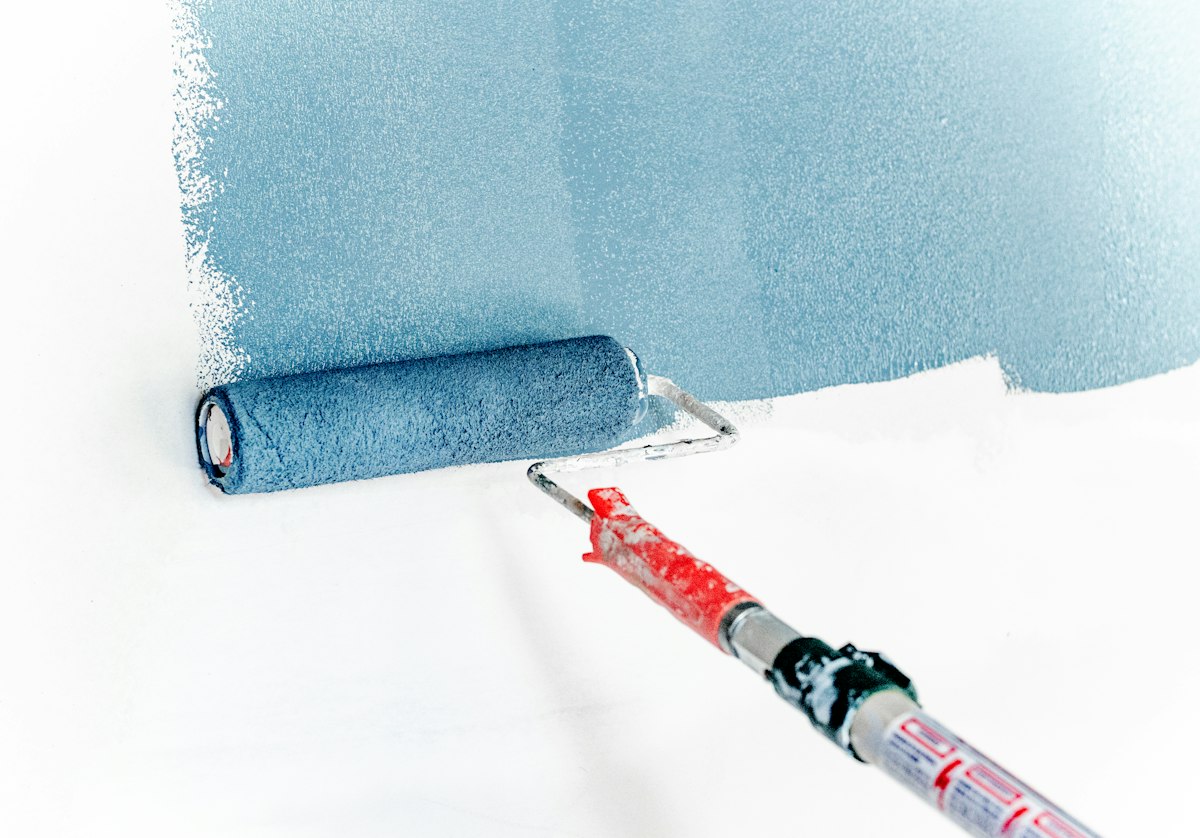
Undercharging is one of the biggest reasons painting businesses fail. You win the job, do excellent work, and then realise — after materials, labour, and time — that you barely broke even.
Pricing a painting job correctly isn't about picking a number and hoping it sounds right. It's a formula. And once you understand it, you'll quote faster, win more jobs, and actually make money on every project.
This guide breaks down exactly how to price a painting job in 2026, with real worked examples for the USA, UK, Australia, and Europe.
Why Most Painters Underprice Their Work
The most common pricing mistakes painters make:
- Guessing at paint quantities — and buying extra "just in case" at their own cost
- Forgetting hidden costs — fuel, tape, drop sheets, brush wear, clean-up time
- Underestimating time — a 40m² (430 sq ft) room takes longer than it looks
- Charging a flat rate — without adjusting for surface condition, ceiling height, or paint type
- Not factoring in overhead — insurance, tools, vehicle costs, admin time
A proper pricing formula prevents all of this.
The Core Painting Job Pricing Formula
Here's the formula every professional painter should use:
Job Price = Materials Cost + Labour Cost + Overhead + Profit Margin
Let's break down each component.
1. Materials Cost
This includes paint, primer, tape, drop sheets, rollers, brushes, and any other consumables.
Paint quantity formula:
Litres needed = Net wall area (m²) ÷ Coverage rate (m²/L) × Number of coats
Coverage rates by paint type:
- Standard interior: 10–12 m²/L (93–111 sq ft/L)
- Premium interior: 12–14 m²/L
- Exterior: 8–10 m²/L (rough or weathered surfaces absorb more)
- Primer: 8–10 m²/L
Always add a 10% buffer for waste and touch-ups.
For consumables, add 15–20% on top of your paint cost to cover tape, rollers, and other supplies.
2. Labour Cost
Labour is usually your biggest cost. Calculate it based on your hourly rate and realistic time estimates.
Time estimates for interior painting:
- Prep work (filling, sanding, masking): 30–60 min per room
- First coat application: 1.5–2 hours per 30m² (320 sq ft)
- Second coat: 1–1.5 hours per 30m² (320 sq ft)
- Clean-up: 20–30 min per room
Recommended hourly rates by region (2026):
| Region | Junior Painter | Experienced Painter | Lead/Specialist |
|---|---|---|---|
| USA | $25–$35/hr | $40–$60/hr | $65–$90/hr |
| UK | £18–£25/hr | £28–£40/hr | £45–£65/hr |
| Australia / NZ | $35–$50/hr | $55–$75/hr | $80–$110/hr |
| Europe (avg) | €20–€30/hr | €35–€50/hr | €55–€80/hr |
3. Overhead Costs
Overhead is the cost of running your business — not tied to any single job.
This includes:
- Vehicle costs (fuel, maintenance)
- Insurance (public liability, tools)
- Equipment depreciation (ladders, sprayers)
- Marketing and admin time
- Phone and software subscriptions
A simple approach: add 10–15% of your total materials + labour as an overhead allowance.
4. Profit Margin
This is what makes your business sustainable — not just surviving, but growing.
Industry standard profit margins for painting:
- Minimum viable: 15%
- Healthy for small business: 20–30%
- Target for established contractors: 30–40%
Apply your margin to the total of materials + labour + overhead:
Job Price = (Materials + Labour + Overhead) × (1 + Margin %)
Real Example: How to Price a Bedroom Paint Job
Let's price a master bedroom repaint from start to finish.
Room details:
- Dimensions: 4.5m × 4m (14.8 ft × 13.1 ft)
- Ceiling height: 2.4m (7.9 ft)
- 1 door, 1 large window
- 2 coats of mid-range interior paint
- Walls only (ceiling not included)
Step 1 — Calculate Wall Area
Perimeter = (4.5 + 4) × 2 = 17m Total wall area = 17 × 2.4 = 40.8m² (439 sq ft) Deduct door (1.8m²) + window (1.4m²) = −3.2m² Net area = 37.6m² (405 sq ft)
Step 2 — Calculate Paint Needed
Coverage rate = 11 m²/L Paint for 2 coats = (37.6 × 2) ÷ 11 = 6.8L Add 10% buffer = 7.5L → buy 8L
Step 3 — Materials Cost
| Item | Cost |
|---|---|
| Paint (8L × $14/L) | $112 |
| Primer (1L) | $18 |
| Tape, drop sheet, rollers | $22 |
| Total materials | $152 |
Step 4 — Labour Cost
| Task | Time | Rate | Cost |
|---|---|---|---|
| Prep + masking | 1 hr | $55/hr | $55 |
| First coat | 1.5 hrs | $55/hr | $82 |
| Second coat | 1 hr | $55/hr | $55 |
| Clean-up | 0.5 hr | $55/hr | $28 |
| Total labour | 4 hrs | $220 |
Step 5 — Add Overhead (12%)
(152 + 220) × 0.12 = $44.64 → $45
Step 6 — Apply Profit Margin (25%)
(152 + 220 + 45) × 1.25 = $521
Quote to client: $520–$540
This is a fair, profitable price. Not the cheapest on the market — but not ripping anyone off either.
How to Price Exterior Painting Jobs
Exterior painting is typically priced 20–40% higher than interior because:
- Surfaces are often larger and harder to access
- Weather windows limit your schedule
- Paint is more expensive (UV-resistant formulas)
- Prep work (scraping, washing, priming) takes longer
- Equipment costs are higher (scaffolding, tall ladders)
A rough exterior pricing guide:
| Job Type | Typical Price Range |
|---|---|
| Single-storey house repaint | $15–$25/m² ($1.40–$2.30/sq ft) |
| Two-storey house | $20–$35/m² |
| Fence or deck | $8–$18/m² |
| Weatherboards / cladding | $18–$30/m² |
Prices vary by region, surface condition, and paint specification.
Pricing Methods: Per m² vs. Flat Rate vs. Hourly
There are three main ways painters charge clients:
Per m² (or sq ft)
Best for: standard jobs with straightforward surfaces
- Easy to quote quickly
- Clients understand it easily
- Risk: unusual conditions (high ceilings, complex trim) can hurt your margin
Flat Rate (Fixed Price)
Best for: clearly scoped jobs you've done many times before
- Predictable for client
- You carry the risk if the job takes longer
- Works well when you know a property type inside out
Hourly Rate
Best for: small touch-up jobs or uncertain scope
- Protects you from scope creep
- Some clients are wary of open-ended pricing
- Can be combined with a quoted maximum
Experienced contractors typically use a fixed price based on their internal per-m² calculation — giving clients certainty while protecting their margin.
5 Practical Tips to Protect Your Profit
1. Always measure on-site — never trust client estimates. A client saying "it's about 4 metres wide" can be off by half a metre. That adds up fast on a full-house repaint.
2. Charge for prep work explicitly. Painters lose thousands by treating prep as "included." List it as a separate line item in your quote — clients see the value and it's harder to cut.
3. Specify paint brand and grade in your quote. If a client wants a cheaper paint after you've quoted, that's a change to scope. Make this clear upfront.
4. Include a variation clause. If walls are in worse condition than expected (holes, damp, multiple colour layers), you need the right to charge more. Add a line: Additional prep or priming required beyond normal condition will be quoted separately.
5. Review your rates at least annually. Paint prices, labour costs, and fuel prices all shift. If you haven't reviewed your rates in 12 months, you're probably undercharging.
Common Mistakes When Pricing a Painting Job
Forgetting the ceiling — If it's included, calculate it separately. Ceilings are typically priced at 70–80% of the wall rate (faster to apply, no cutting-in on edges).
Not accounting for multiple colours — Switching between colours takes more time and paint. Add 15–20% per colour change.
Ignoring travel time — If a job is 45 minutes away, that's 1.5 hours of your day. Either factor it into your quote or add a travel charge.
Quoting from photos alone — Photos hide surface damage, moisture issues, and awkward angles. Always visit before quoting.
Matching competitor prices without checking your costs — The cheapest quote on the market is often a painter who hasn't priced correctly. Don't race to the bottom.
How Paint Pro Calc Makes Pricing Instant
Use Paint Pro Calc to instantly calculate paint, cost, and profit. Enter your room dimensions and paint type, and it outputs:
- Exact litres of paint needed
- Material cost breakdown
- Labour cost estimate
- Suggested quote price with profit margin
- Professional PDF quote ready to send to your client
Pro users can save every project, track actual expenses against quotes, and see their real profit on every job — all for $2.99/month.
Summary: Painting Job Pricing at a Glance
| Step | What to do |
|---|---|
| 1. Measure | Get exact wall area (m² or sq ft) on-site |
| 2. Calculate paint | Use coverage rate × coats + 10% buffer |
| 3. Add materials | Paint + consumables (tape, rollers, drop sheets) |
| 4. Calculate labour | Hours × your hourly rate |
| 5. Add overhead | 10–15% of materials + labour |
| 6. Apply margin | 20–35% target profit |
| 7. Review | Does the price reflect your quality and experience? |
Pricing a painting job correctly takes practice — but once you know the formula, it becomes fast and consistent. The painters who grow their businesses aren't the cheapest. They're the ones who know their numbers.
Start Quoting Smarter Today
Stop guessing. Stop undercharging. Start your free estimate now with Paint Pro Calc and save time and money on every single job.
No spreadsheets. No complex formulas. Just enter your dimensions and get a complete, professional quote in under a minute.